🔥 World Cup 2026 Itinerary PDF | Download Now🔥

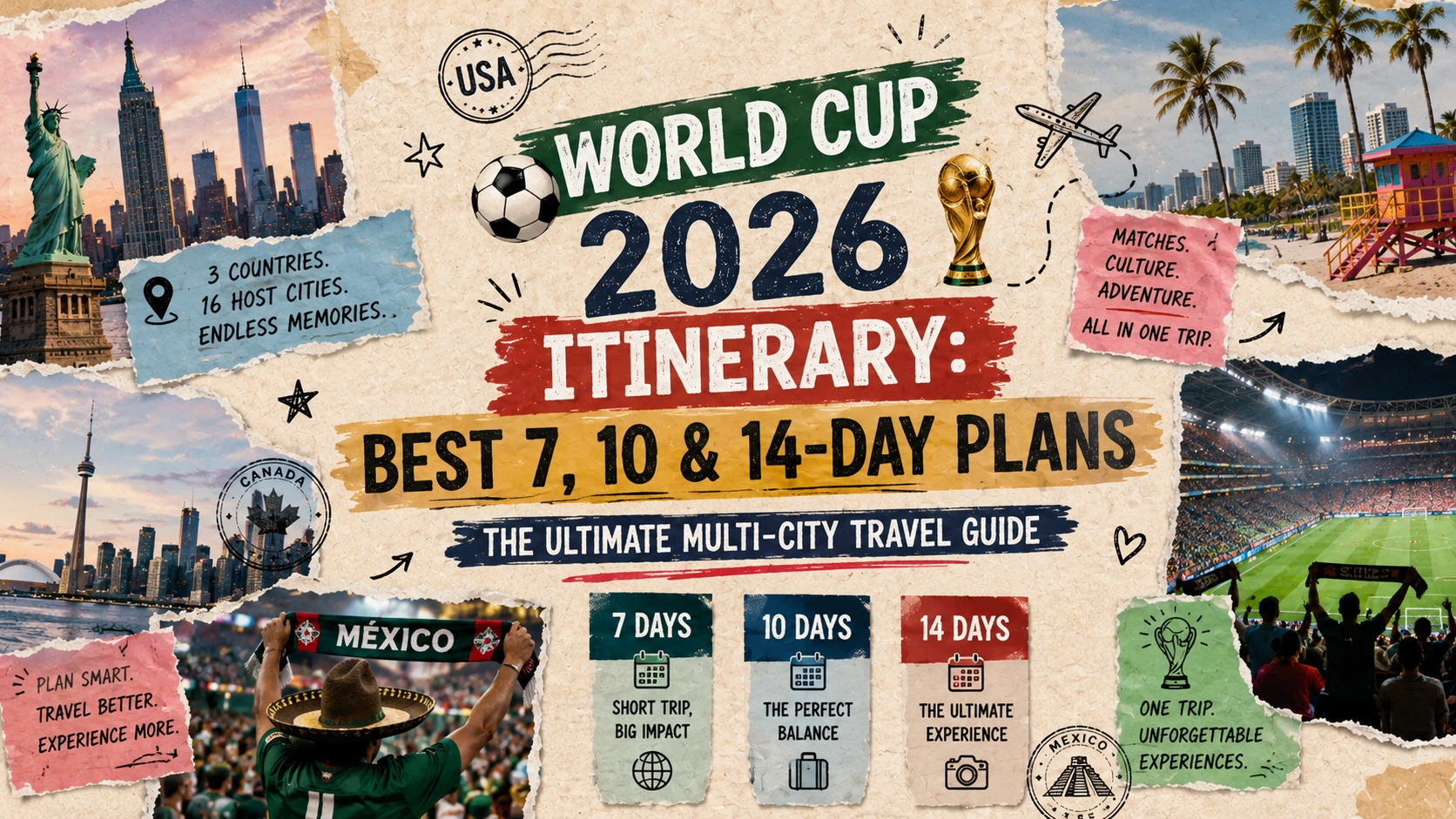
World Cup 2026 Itinerary: The Perfect Travel Guide
Planning the perfect World Cup 2026 itinerary is not as simple as choosing a few matches and booking flights. With the tournament spread across the United States, Canada, and Mexico, many travelers will quickly realize that trying to “see everything” can turn an exciting football trip into an exhausting travel marathon.
Whether you are planning a 7-day football escape, a 10-day multi-city adventure, or a full 14-day World Cup journey, this guide will help you build the best World Cup 2026 itinerary based on your travel style, trip duration, and preferred host cities.
Key Takeaways
- A 10-day World Cup 2026 itinerary offers the best balance between matches, travel, and sightseeing
- The best itineraries focus on one region instead of crossing the continent multiple times
- New York, Miami, Dallas, and Los Angeles are among the easiest host cities to combine
- Staying 3–4 days per city creates a smoother and more enjoyable travel flow
- Over planning is one of the biggest mistakes travelers will make during World Cup 2026
- Booking flights and accommodations early will be critical due to high tournament demand
Table of Contents
What is the Best World Cup 2026 Itinerary?
What is a World Cup 2026 itinerary? A World Cup 2026 itinerary is a structured travel plan that combines match days, host cities, flights, hotels, sightseeing, and recovery time across the USA, Canada, and Mexico.
The best World Cup 2026 itinerary is one that balances match days, travel time, and city exploration without creating unnecessary stress. For most travelers, the ideal trip length will be between 7 and 10 days, focusing on two or three cities within the same region.
Rather than trying to visit as many host cities as possible, the smartest approach is to prioritize experience quality, efficient transportation, and enough flexibility to enjoy both the football atmosphere and the destination itself.
Here is the best itinerary type based on travel style:
- 7 Days → Best for first-time visitors who want a focused and efficient trip
- 10 Days → Best overall balance for matches, sightseeing, and multi-city travel
- 14 Days → Best for extended vacations and travelers visiting multiple regions
- 1–2 Cities → Best for relaxed travel with minimal airport fatigue
- 3–4 Cities → Best for experienced travelers comfortable with faster pacing
The most successful World Cup itineraries usually stay within one major region:
- East Coast: New York, Toronto, Miami
- Central Region: Dallas, Houston, Mexico City
- West Coast: Los Angeles, San Francisco, Seattle
Our World Cup 2026 Travel Guide provides a step-by-step system to plan your World Cup trip efficiently, from choosing the right cities to building a realistic itinerary and optimizing travel between destinations.
How Do You Plan a Multi-City World Cup 2026 Itinerary Trip?
Planning a World Cup 2026 trip requires more strategy than a normal vacation. Distances between host cities are massive, match schedules can quickly reshape transportation demand, and millions of travelers will be moving across North America at the same time.
The travelers who enjoy the tournament the most will not necessarily be the ones attending the highest number of matches. They will be the ones who build realistic itineraries with efficient routes, flexible schedules, and enough time to enjoy each destination beyond the stadium.
1- Choose One Primary Region
The most important decision is choosing your main travel region early.
World Cup 2026 is spread across the USA, Canada, and Mexico, but attempting to jump constantly between regions can create unnecessary fatigue and expensive travel days.
The most efficient routes are usually:
- East Coast: New York, Toronto, Miami
- Central Route: Dallas, Houston, Mexico City
- West Coast: Los Angeles, San Francisco, Seattle
Each region creates a different travel atmosphere.
The East Coast is ideal for travelers who want iconic cities, nightlife, beaches, and strong international flight connections. The Central route feels more football-focused and practical, especially for visitors prioritizing stadium experiences and shorter flight times. The West Coast offers a more relaxed lifestyle experience with entertainment, coastal scenery, and major tourist attractions.
2- Balance Match Days and Recovery Days
One of the biggest mistakes during international tournaments is underestimating travel fatigue.
A World Cup trip includes:
- Airport transfers
- Long walking days
- Public transportation
- Stadium security lines
- Late-night celebrations
- Time zone adjustments
Trying to attend matches every single day often reduces the quality of the overall experience.
A smarter structure looks like this:
- Match Day
- Exploration or lighter sightseeing day
- Travel day
- Recovery evening
- Next match
This pacing gives you enough flexibility to enjoy the city itself instead of spending the entire trip rushing between airports and stadiums.
3- Book Flights and Hotels Early
World Cup demand changes travel pricing and hotel availability dramatically.
The closer accommodations are to stadium districts, downtown areas, or public transportation hubs, the faster they will sell out once the official match schedule is released.
Flights between major host cities like:
- New York ↔ Miami
- Dallas ↔ Los Angeles
- Toronto ↔ New York
- Mexico City ↔ Dallas
will likely experience major demand spikes during knockout rounds and high-profile matches.
Booking early gives you:
- Better hotel locations
- More flexible flight schedules
- Easier stadium transportation
- Lower stress during the tournament
For most travelers, staying centrally located near transit systems is far more valuable than staying in cheaper areas far from match activity.
4- Avoid Trying to Visit Too Many Cities
More cities does not automatically create a better World Cup trip.
Many travelers will try to maximize the tournament by visiting four, five, or even six cities in a short period. In reality, this often leads to:
- Constant packing
- Airport exhaustion
- Missed attractions
- Limited city exploration
- Higher transportation stress
A trip with:
- 2 cities in 7 days
- 3 cities in 10 days
- 3–4 cities in 14 days
World Cup 2026 Itinerary Overview
The ideal World Cup 2026 itinerary depends on how much time you have, how many matches you want to attend, and how comfortable you are with multi-city travel. Most travelers will have the best experience with a 7 to 10-day itinerary focused on one major region.
A shorter trip creates a more relaxed pace, while longer itineraries allow you to combine multiple host cities and experience different football atmospheres across North America.
| Duration | Ideal Cities | Best For | Travel Style |
|---|---|---|---|
| 7 Days | 1–2 Cities | First-time visitors | Focused and efficient |
| 10 Days | 2–3 Cities | Most travelers | Balanced and optimized |
| 14 Days | 3–4 Cities | Extended vacations | Flexible and immersive |
A 7-day itinerary works best for travelers who want a simple structure with minimal travel fatigue. This is ideal for combining one major city with one secondary destination in the same region.
A 10-day itinerary offers the strongest balance between football, sightseeing, nightlife, and recovery time. It gives enough flexibility to attend multiple matches while still enjoying the destinations themselves.
A 14-day itinerary is best for travelers turning the tournament into a full vacation experience. This format allows deeper exploration, additional host cities, and more flexibility around match schedules, but requires stronger planning to avoid exhausting travel days.
The most important factor is not the number of cities you visit. It is how efficiently your itinerary flows between them. Strong routes with short travel times and logical city combinations will create a far smoother World Cup experience than constantly moving across the continent.
Best 7-Day World Cup 2026 Itinerary
A 7-day World Cup 2026 itinerary works best when you focus on one primary region and avoid excessive travel. This format is ideal for travelers with limited vacation time who still want to experience match atmosphere, iconic attractions, and two distinct host cities without feeling rushed.
The key to a successful 7-day trip is simplicity:
- One major travel day
- One or two matches
- Enough downtime between activities
- Cities with strong flight connections
Trying to visit three or more destinations in one week usually creates unnecessary stress and reduces the overall experience.
Option 1: New York + Miami
New York and Miami create one of the strongest World Cup combinations for first-time visitors.
The route is simple, flights are frequent, and the contrast between the two cities makes the itinerary feel dynamic without becoming exhausting. New York delivers the iconic urban World Cup atmosphere, while Miami adds beaches, nightlife, and a more relaxed energy after intense match days.
Suggested structure:
| Day | Plan |
|---|---|
| Day 1 | Arrival in New York |
| Day 2 | Explore Manhattan + fan zones |
| Day 3 | Match day + evening activities |
| Day 4 | Flight to Miami |
| Day 5 | South Beach + relaxation |
| Day 6 | Match day or city exploration |
| Day 7 | Final sightseeing + departure |
New York is ideal for:
- First-time USA visitors
- Football fans wanting major event atmosphere
- Travelers interested in landmarks and nightlife
Miami is ideal for:
- Beach lovers
- Couples
- Travelers wanting a lighter second half of the trip
This combination works especially well because both cities offer completely different travel experiences while remaining easy to connect by direct flight.
Tip: Stay near Midtown Manhattan in New York and near South Beach or Brickell in Miami to reduce transportation time during the tournament.
If you want a deeper breakdown of attractions and neighborhoods, explore the dedicated New York City Itinerary and Miami Itinerary guides on Bookyne.
Option 2: Los Angeles + Dallas
Los Angeles and Dallas create a very different type of World Cup itinerary focused on entertainment, sports culture, and stadium energy.
Los Angeles offers:
- Beaches
- Hollywood attractions
- Entertainment districts
- Relaxed West Coast atmosphere
Dallas offers:
- Strong football culture
- Easier navigation
- Sports-centered experience
- Faster-paced nightlife and dining
| Day | Plan |
|---|---|
| Day 1 | Arrival in Los Angeles |
| Day 2 | Santa Monica + Hollywood |
| Day 3 | Match day |
| Day 4 | Flight to Dallas |
| Day 5 | Downtown Dallas + fan activities |
| Day 6 | Match day |
| Day 7 | Fort Worth or departure |
This route is ideal for travelers who want:
- A more sports-focused trip
- Strong stadium atmosphere
- A balance between entertainment and football culture
Dallas also tends to feel more manageable logistically than some larger coastal cities, making it a practical second destination during a short trip. For more details, make sure to check our Dallas Itinerary Guide.
What Should You Prioritize in a 7-Day Itinerary?
A shorter World Cup trip becomes significantly better when logistics stay simple.
Prioritize:
- Direct flights between cities
- Central hotel locations
- One major attraction area per day
- Walkable neighborhoods
- Flexible evenings
Avoid:
- Back-to-back travel days
- Multiple domestic connections
- Overloading every day with activities
- Long suburban commutes to hotels
The goal of a 7-day itinerary is not to maximize city count. It is to create a smooth, memorable World Cup experience that combines football, exploration, and enough flexibility to actually enjoy the atmosphere around the tournament.
Best 10-Day World Cup 2026 Itinerary
A 10-day World Cup 2026 itinerary offers the best overall balance for most travelers. It gives enough time to attend multiple matches, explore several host cities, and still maintain a comfortable travel pace without constantly rushing between airports.
This is the ideal duration for visitors who want:
- Multiple stadium experiences
- More than one major city
- A mix of football and sightseeing
- Flexible recovery time between travel days
With 10 days, two to three cities becomes the optimal structure.
Option 1: New York → Miami → Dallas
This is one of the strongest all-around World Cup routes because it combines iconic tourism, beach atmosphere, and football culture in a very balanced flow.
Suggested structure:
| Days | City | Focus |
|---|---|---|
| Days 1–3 | New York | Landmarks, nightlife, match |
| Day 4 | Travel to Miami | Recovery + evening activities |
| Days 5–7 | Miami | Beaches, fan zones, match |
| Day 8 | Travel to Dallas | Transition day |
| Days 9–10 | Dallas | Stadium atmosphere + local exploration |
Why this route works:
- Strong direct flight network
- Clear contrast between destinations
- Balanced pacing
- Different styles of World Cup atmosphere
New York delivers the biggest-city energy and major international fan presence. Miami creates a more social and relaxed environment, especially for nightlife and outdoor activities. Dallas adds a more football-centered atmosphere with easier navigation and major stadium culture.
This itinerary is ideal for:
- First-time North America visitors
- Travelers wanting iconic destinations
- Football fans balancing tourism and matches
Tip: Avoid booking very early flights after match nights. Late celebrations and transportation delays are common during major tournaments.
Option 2: Los Angeles → Dallas → Mexico City
This route creates a more football-intensive and culturally diverse experience.
Los Angeles provides:
- Entertainment
- Coastal lifestyle
- Celebrity and nightlife atmosphere
Dallas adds:
- Stadium energy
- Sports-focused experience
- Central travel positioning
Mexico City introduces:
- One of the strongest football atmospheres in North America
- Historic neighborhoods
- Incredible food culture
- Dense urban exploration
Suggested structure:
| Days | City | Focus |
|---|---|---|
| Days 1–3 | Los Angeles | Beaches, attractions, match |
| Day 4 | Travel to Dallas | |
| Days 5–7 | Dallas | Match + downtown exploration |
| Day 8 | Travel to Mexico City | |
| Days 9–10 | Mexico City | Football culture + historic center |
This route works particularly well for travelers who want the tournament atmosphere itself to feel central to the experience.
Mexico City can become one of the most memorable stops during World Cup 2026 because football culture is deeply integrated into daily life, creating a very different atmosphere compared to many USA host cities.
Tip: Plan lighter activity days in Mexico City initially due to altitude adjustment for some travelers.
How Many Matches Should You Attend in 10 Days?
For most travelers, attending:
- 2 matches → balanced sightseeing experience
- 3 matches → ideal football-focused balance
- 4+ matches → very intense pacing
The best World Cup trips leave enough room for:
- Fan festivals
- Neighborhood exploration
- Local restaurants
- Recovery time
- Flexible evenings
A schedule overloaded with matches often becomes physically exhausting, especially when flights, hotel changes, and long stadium transportation times are involved.
A practical structure usually looks like:
- Match every 2–3 days
- One travel day between cities
- One lighter sightseeing day after major match nights
This pacing allows the tournament to remain exciting throughout the trip instead of becoming overwhelming halfway through the itinerary.
Best 14-Day World Cup 2026 Itinerary
A 14-day World Cup 2026 itinerary is ideal for travelers turning the tournament into a full international vacation experience. With two weeks available, you can comfortably combine multiple host cities, attend several matches, and still have enough flexibility to enjoy each destination beyond football.
The advantage of a longer itinerary is not simply adding more cities. It is creating a smoother travel rhythm with fewer rushed transitions, more recovery time, and deeper exploration inside each destination.
For most travelers, three to four cities is the ideal maximum during a 14-day trip.
Option 1: East Coast Route
The East Coast route is one of the easiest and most efficient World Cup itineraries because of strong transportation infrastructure, shorter flight times, and dense urban experiences.
Suggested route: Toronto → New York → Miami
Suggested structure:
| Days | City | Focus |
|---|---|---|
| Days 1–4 | Toronto | Arrival, match, city exploration |
| Days 5–8 | New York | Landmarks, nightlife, fan zones |
| Days 9–14 | Miami | Beach recovery, match, nightlife |
Why this route works:
- Efficient flight connections
- Strong public transportation
- Balanced city contrast
- Less logistical complexity
Toronto creates a smoother and calmer start to the trip with a more manageable pace compared to larger American host cities. New York becomes the high-energy centerpiece of the itinerary with iconic attractions and intense World Cup atmosphere. Miami then works perfectly as the final destination because it allows travelers to slow down, recover, and enjoy beaches, nightlife, and outdoor experiences.
This itinerary is ideal for:
- Couples
- First-time North America visitors
- Travelers wanting a balance between football and vacation atmosphere
Tip: Spend longer stays in your final city whenever possible. The reduced pressure near the end of the trip usually improves the overall experience significantly.
Option 2: Los Angeles → Dallas → Mexico City
This route creates one of the strongest football-centered itineraries while still offering major cultural variety.
Suggested structure:
| Days | City | Focus |
|---|---|---|
| Days 1–4 | Los Angeles | Attractions, beaches, match |
| Days 5–8 | Dallas | Stadium atmosphere + sports culture |
| Days 9–14 | Mexico City | Football culture, food, history |
This combination works extremely well because each city delivers a completely different atmosphere.
Los Angeles feels entertainment-driven and visually iconic, with coastal neighborhoods and major tourist attractions. Dallas creates a more concentrated sports environment with simpler navigation and strong fan energy around match days. Mexico City then transforms the trip into a deeper football and cultural experience with historic districts, passionate supporters, and one of the most dynamic urban environments in the tournament.
This route is particularly strong for:
- Football-focused travelers
- Groups of friends
- Travelers wanting nightlife and social atmosphere
- Visitors interested in food and local culture
Tip: Leave flexibility near knockout stages whenever possible. Match schedules and travel demand can shift dramatically depending on qualified teams and host city activity.
Best World Cup 2026 Itinerary by Travel Style
The best World Cup 2026 itinerary is not necessarily the one with the most destinations. The strongest trips are usually the ones with efficient routes, enough recovery time, and a clear balance between football, exploration, and flexibility.
| Travel Style | Recommended Route | Ideal Duration | Why It Works | Best For |
|---|---|---|---|---|
| First-Time Visitors | New York → Miami | 7–10 Days | Combines iconic landmarks, beaches, nightlife, and strong flight connections with manageable logistics | Travelers wanting a balanced first World Cup experience |
| Couples | Los Angeles → Miami | 10–14 Days | Mixes coastal scenery, romantic nightlife, entertainment, and relaxed pacing | Couples seeking football plus lifestyle travel |
| Families | Toronto → New York | 7–10 Days | Easier transportation, family-friendly attractions, predictable infrastructure, and walkable areas | Families traveling with children |
| Football-Focused Travelers | Dallas → Mexico City | 10–14 Days | Strong stadium atmosphere, passionate fan culture, and football-centered energy | Fans prioritizing matches and tournament atmosphere |
| Sightseeing-Focused Travelers | Toronto → New York → Los Angeles | 14 Days | Combines major landmarks, diverse city experiences, and iconic attractions across North America | Travelers wanting football plus a full vacation experience |
The best World Cup 2026 itinerary is not necessarily the one with the most destinations. The strongest trips are usually the ones with efficient routes, enough recovery time, and a clear balance between football, exploration, and flexibility.
Which World Cup 2026 Host Cities Combine Best Together?
The best World Cup 2026 host city combinations are the ones that reduce travel time, maintain strong flight connections, and create a balanced experience between matches and sightseeing. For most travelers, staying within one region is the smartest strategy because it minimizes airport fatigue and keeps the itinerary smoother.
The strongest combinations usually connect cities with:
- Frequent direct flights
- Similar time zones
- Complementary travel experiences
- Efficient transportation infrastructure
1- Best East Coast Combinations
| City Combination | Why It Works | Best For |
|---|---|---|
| New York + Miami | Strong flight network, iconic contrast between urban energy and beach atmosphere | First-time visitors |
| Toronto + New York | Short travel distance and efficient transportation | Families and sightseeing travelers |
| Miami + Atlanta | Easy domestic travel with strong nightlife and sports atmosphere | Football-focused travelers |
The East Coast is one of the easiest regions to navigate during World Cup 2026 because major airports are well connected and travel times remain relatively manageable.
New York works well as the centerpiece of many itineraries because it connects efficiently with both Canada and southern USA host cities.
Miami adds a completely different atmosphere with beaches, nightlife, and outdoor experiences, making it one of the strongest secondary destinations during the tournament.
Best Central Region Combinations
| City Combination | Why It Works | Best For |
|---|---|---|
| Dallas + Houston | Short flights and strong football culture | Match-focused travelers |
| Dallas + Mexico City | Excellent football atmosphere and cultural contrast | Groups and football fans |
| Houston + Mexico City | Efficient regional connection with strong food and nightlife scenes | Extended vacations |
The Central region is often the most practical choice for travelers prioritizing football itself.
Dallas and Houston provide:
- Large stadium environments
- Easier navigation
- Strong sports culture
- Simpler domestic travel logistics
Mexico City transforms the itinerary into a more immersive football experience with passionate fan culture and one of the strongest atmospheres in the tournament.
This region works especially well for travelers attending multiple matches.
Best West Coast Combinations
| City Combination | Why It Works | Best For |
|---|---|---|
| Los Angeles + San Francisco | Strong tourism value and easy domestic flights | Sightseeing-focused travelers |
| Los Angeles + Seattle | Contrasting city atmospheres with strong tourism infrastructure | Extended vacations |
| San Francisco + Seattle | Scenic West Coast experience with manageable pacing | Couples and relaxed travelers |
The West Coast creates a slower and more lifestyle-oriented World Cup experience.
Los Angeles works particularly well because it combines:
- Beaches
- Entertainment
- Major attractions
- Strong nightlife
San Francisco and Seattle add:
- Different architecture
- Cooler climate
- Waterfront experiences
- Strong food scenes
This region is ideal for travelers who want football to feel integrated into a broader vacation rather than becoming the only focus of the trip.
What Is the Best Overall City Combination?
For most travelers, the strongest overall combinations are:
| Combination | Strength |
|---|---|
| New York + Miami | Best overall balance |
| Dallas + Mexico City | Best football atmosphere |
| Toronto + New York | Best for first-time visitors |
| Los Angeles + Dallas | Best mix of entertainment and sports |
| Los Angeles + Miami | Best lifestyle-focused itinerary |
What Should You Pack for a World Cup 2026 Trip?
Packing correctly for World Cup 2026 can make a major difference in your overall travel experience. Between stadium security rules, long walking days, changing climates, and multi-city flights, smart packing helps reduce stress and keeps the trip far more comfortable.
This tournament will involve:
- Full-day city exploration
- Long stadium queues
- Heavy public transportation use
- Outdoor fan festivals
- Variable weather between regions
The best approach is to pack lightweight, practical, and travel-efficient essentials that work across multiple destinations.
| Item | Why It Matters | Best For |
|---|---|---|
| Portable Power Bank | Phones drain quickly during navigation, ticket scanning, and match-day filming | All travelers |
| Anti-Theft Crossbody Bag | Keeps passports, phones, and tickets secure in crowded areas | Urban travel and stadium days |
| Comfortable Walking Shoes | Most travelers will walk significantly more than expected | Multi-city itineraries |
| Lightweight Rain Jacket | Weather can shift quickly depending on host city | East Coast and Canada routes |
| Compression Packing Cubes | Makes constant hotel transitions easier | 10–14 day itineraries |
| Universal Travel Adapter | Important for international travelers visiting multiple countries | Europe and UK travelers |
| Reusable Water Bottle | Useful during long sightseeing and stadium days | Summer travel |
| Neck Pillow | Helps during domestic flights between host cities | Multi-flight itineraries |
| RFID Passport Holder | Adds convenience and organization during airport transfers | International visitors |
| Noise-Canceling Headphones | Helpful for long flights and crowded airports | Extended itineraries |
FAQs
How many days do you need for World Cup 2026?
Most travelers should plan for 7 to 10 days for the best balance between matches, sightseeing, and travel pacing. A 7-day trip works well for one or two cities, while a 10-day itinerary allows you to comfortably explore two to three host cities without feeling rushed.
What is the best World Cup 2026 itinerary for first-time visitors?
The best itinerary for first-time visitors is usually New York and Miami. This combination offers iconic landmarks, strong World Cup atmosphere, easy flight connections, beaches, nightlife, and a balanced travel pace that works well for international travelers.
Should you rent a car during World Cup 2026?
Most travelers will not need a car in cities like New York, Toronto, or Miami because public transportation and rideshare services are widely available. However, renting a car can become useful in Los Angeles, Dallas, or for regional road trips between nearby host cities.
Is 7 days enough for World Cup 2026?
Yes, 7 days is enough for a strong World Cup experience if you focus on one region and limit the trip to one or two cities. This format works especially well for travelers attending one or two matches while still exploring major attractions and fan zones.
What is the best region to visit during World Cup 2026?
The best region depends on your travel style:
– East Coast → best overall balance
– Central Region → best football atmosphere
– West Coast → best lifestyle and sightseeing experience
Most travelers will have a smoother trip by staying within one region instead of crossing the continent multiple times.
When should you book your World Cup 2026 trip?
Flights and hotels should ideally be booked shortly after the official match schedule is released. Host cities will experience extremely high demand during the tournament, especially near stadium districts and central tourist areas.
What is a travel itinerary?
A travel itinerary is a structured trip plan that organizes your destination, dates, activities, transportation, accommodation, and timing. It helps you know what to do each day and how to move efficiently between places without wasting time.
How do you plan a multi-city World Cup itinerary trip?
Start by choosing your trip length, then select two to four host cities that connect well by direct flights or short travel routes. Build your itinerary around match days, add recovery time between cities, and avoid crossing too many regions in one trip.